
If you ask anyone IGNOU M.Com student what worries them most during the final year the answer will be not the paper on theory. It’s the work. It’s not because the project is impossible, but because no one can explain it in simple and concrete terms. The guidelines feel formal, the language of university seems distant and senior students often say, “Bas format follow karo.” This advice is not complete.
An M.Com project at IGNOU isn’t about showing amazing research abilities. It is about showing that you know your subject enough to analyze a real issue, analyse it sensibly and then present it in order. Once you’ve grasped this idea, the project becomes manageable. This article will help you write an M.Com research project to IGNOU University step by step without getting too complicated.
What IGNOU Actually Expects From an M.Com Project
IGNOU does not expect you to produce a PhD-level thesis. Yet IGNOU doesn’t allow casual, copy-paste work either. The project sits somewhere in between. The university hopes to see three elements clearly.
The first is whether you comprehend the topic you have selected. A second factor is whether you’re able make sense of and analyze relevant data. In the third, you must articulate your findings in sensible and well-organized manner.
Many students score low marks not simply because the subject is not good enough or their goals are not met, but because their objectives and analysis as well as their conclusions do not align with one another. IGNOU examiners find this out extremely quickly.
Choosing the Right Topic (This Decides Half the Outcome)
Topic selection is where most students make a mistake. Sometimes they choose something that is too broad or something that appears impressive, but lacks details that are easily available. Both causes problems later.
A great M.Com research topic is:
-
Learn more about your syllabus.
-
Narrow enough to study properly
-
Available data
For instance, “A Study of Marketing Strategies” is too vague. “A Study on Marketing Strategies of Patanjali Products in Urban Areas” is still risky even if you have data. A better alternative is “A Study on Consumer Perception Towards Patanjali Products in [City Name].”
Always ask yourself a single one-question before you decide on a topic: Can I realistically gather the necessary data within my time and resources? If the answer is unclear, rethink the topic.
Writing the Project Synopsis (Do Not Treat This Casually)
IGNOU requires synopsis approval prior to the project is finalized. Many students rush through this phase and regret it later. The synopsis does not have to be one-page document. This is the document on which your entire work is examined.
A typical M.Com Project synopsis of IGNOU MCOM project help (mandolinman.it) includes:
-
The study’s title
-
Introduction
-
Resolving the problem
-
Objectives
-
Research methodology
-
Scope and limitations
-
Chapter scheme
-
References
The objectives need to be clear and limited in the number. Three to five objectives is ideal. In writing ten objectives, you will create confusion when analyzing. After the synopsis has been accepted refrain from changing the topic or the methodology. Minor deviations are often the reason for rejection during evaluation.
Structure of an IGNOU M.Com Project Report
IGNOU follows a conventional academic structure. It is not possible to get additional marks for trying different formats. You should stick with the formats that work.
Chapter 1: Introduction
This chapter explains the study is all about and why it’s significant. It explains the background of the topic, the problem statement, objectives, scope, and limitations.
The statement of problem should not be a dramatic statement. It should only describe the gap or issue the study is seeking to solve. Objectives should be stated clearly and in a direct manner. This chapter is the guiding principle for the entire process, so the clarity of this chapter will prevent problems later.
Chapter 2: Review of Literature
The literature review indicates that you’re not operating in isolation. It summarizes the previous research that is related to your topic. They could be journal articles research reports, theses, or research studies published.
Each study should be briefly described. Be careful not to fill this chapter with unnecessary information. The aim is to demonstrate what’s been done in the past and to show where your project fits in. The chapter should conclude with a short synopsis linking previous studies in your research helps strengthen this section.
Chapter 3: Research Methodology
This is one of the most important chapters from an evaluation point of perspective. It details how the study was conducted.
It is important to clearly state:
-
Research design
-
Sources of data (primary or second)
-
Sample size and sampling technique
-
Tools used for data collection
-
Techniques that are used to analyse
If you used questionnaires, detail how these were distributed. Give whom. If you relied solely on secondary information, be clear about the sources. Avoid vague explanations. Clarity here can help establish credibility.
Chapter 4: Data Analysis and Interpretation
This chapter is where you will find the true burden of your task. Data must be presented in tables, charts, or graphs in the event that it is required. Also, each data table should be accompanied with explanation.
Many students make the blunder of explicating what the table will show instead of understanding what it means. Interpretation should tie the data to the goals of your study. If one of the goals is to examine customer satisfaction, your analysis should clarify what the data reveals about satisfaction levels.
Chapter 5: Findings, Suggestions, and Conclusion
This chapter summarises the outcome of the study. The results should be written in point order and directly taken from the analysis. Ideas should be objective and based upon findings, not personal views.
The conclusion should summarize the main purpose of the study and the overall findings. Don’t introduce any new information or arguments here. A concise conclusion leaves a stronger impression than a long one.
Writing Style That Works for IGNOU Evaluation
IGNOU prefers simple and clear academic language. You do not need complex vocabulary. What is important is if your ideas are simple to understand.
The writer should write in third person. Be consistent in the tense. Avoid emotional words. However avoid writing like you’re writing for a machine. Natural flow with clear explanations works best.
Formatting should adhere to standard academic guidelines:
-
A4 size paper
-
1-inch margins
-
12-point font
-
1.5 Line spacing
-
Properly numbered pages
Figures and tables should be designated with numbers and titles. References should be included consistently.
Mistakes That Cost Students Marks
Plagiarism is among the most serious risks. Copying content from websites directly or previous work is easily discovered. Even when plagiarism software isn’t used, examiners can recognise repeatedly copied content.
Another common error is a poor alignment. Objectives may mention a specific thing, but an analysis will show something else and the conclusions speak about something entirely different. This indicates poor planning.
In the absence of synopsis approval, and the submission of a proposal that differs substantially from the approved version could result in problems.
Final Check Before Submission
Before submitting, you should read the document as a whole, not chapter by chapter. Be sure that the flow makes sense. Verify references, tables and formatting. Make sure that declarations, certificates acknowledgements, and certificates are included in accordance with IGNOU specifications.
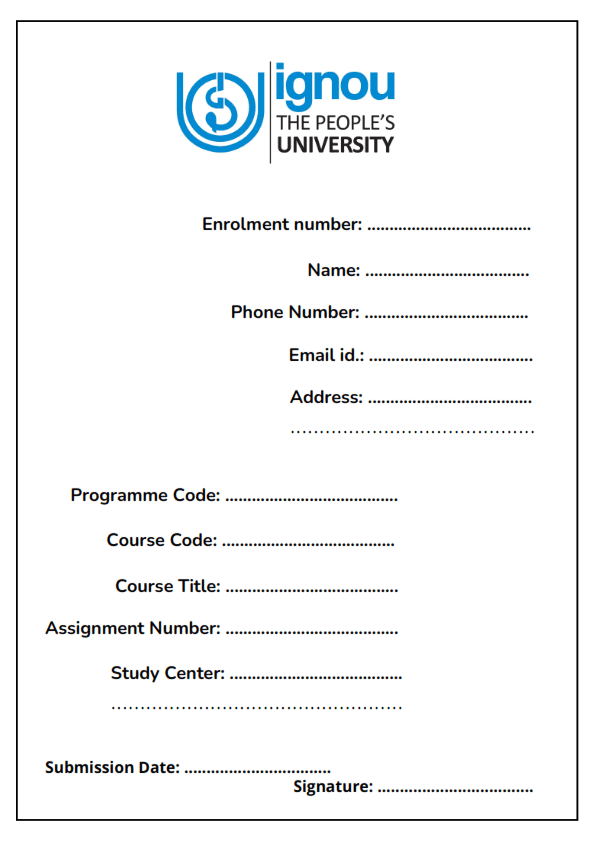
Submitting a clean and well-organized project on time eliminates unnecessary stress in the last stage.
Final Words
Writing for an M.Com assignment for IGNOU University is less about intelligence, and an exercise in discipline. Students who begin planning in advance follow guidelines approved by the university and compose their essays with integrity rarely are rejected. This project gives students the chance to demonstrate the application of the business subjects, not a test of advanced research terminology.




